Builds
MomoStack: Links, Screenshots and Notes in One Offline Android Vault (Zero Telemetry)
MomoStack keeps links, OCR screenshots, and notes in one offline Android vault: local SQLite, zero telemetry, no account. Design and costs inside.
Last updated: November 15, 2026 · 7-minute read
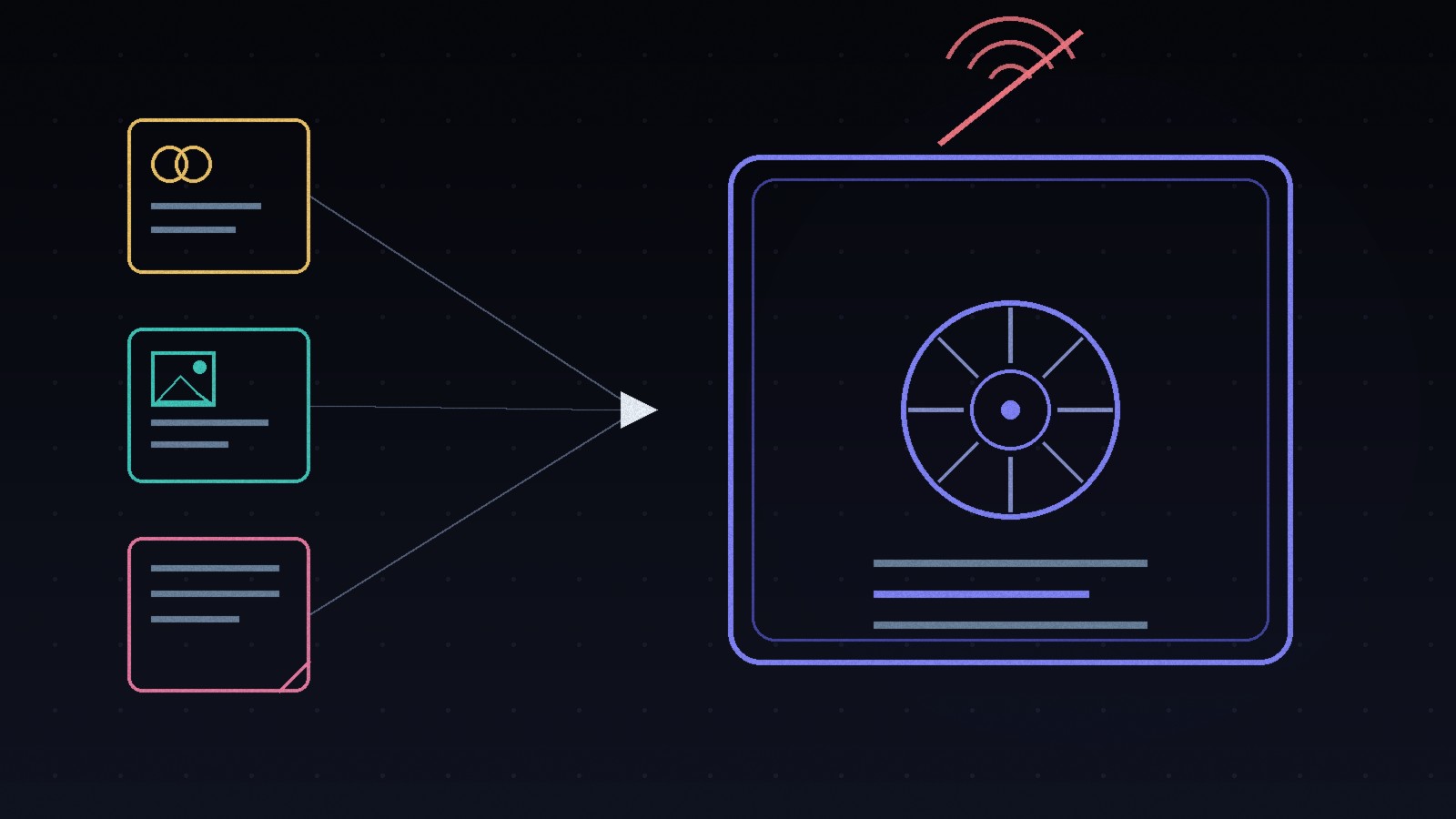
Captured in one tap, persisted to local SQLite, transmitted nowhere — that is the architecture line I wrote for MomoStack, the offline-first Android vault I built for links, screenshots, and private notes. No account, no sync server, and no analytics SDKs sit anywhere in the design. What follows is the design as documented in the repository, including what that custody model costs.
Every cloud bookmarking service carries the same three long-term risks, and the README names them as the reason this app exists: the service gets acquired and closed, it gets breached and leaks reading habits, or it starts charging rent for data you already own. I built MomoStack so all three failure modes have nothing to attach to. There is no server-side component at all, so there is nothing to close, breach, or meter.
What This Repository Contains
Read the repository for what it is: the release hub and landing site for the app, not the Android source code. The repository description says so in plain words, and the file tree confirms it — six static site pages, one stylesheet, one motion script, screenshots, and the project documents. The app itself ships as signed APK releases attached to the repository.
That split matters for how the claims below should be read. The feature set, the database path, the permission posture, and the checksum ritual are all documented in the README, the changelog, and the security policy, and the site privacy page presents the same audit in public. The Android code itself is not in this tree to audit line by line, whatever the README says about auditability, and the caveats return to that point.
Six Capabilities, One Vault
The README documents six capabilities, and each one is a custody decision as much as a feature. Universal share-sheet capture sends a URL from Chrome, YouTube, X, Reddit, Instagram, or Substack straight into the vault, with OpenGraph metadata, posters, read-times, and topic tags resolved by background workers. A tracker sanitizer then strips utm, fbclid, gclid, share tokens, and affiliate hashes from the inbound URL before anything is written, so the stored record is the clean canonical link.
The on-device OCR vault transcribes screenshots with Google ML Kit models running on the device, and any transcribed line can be copied with a tap, so receipts, terminal output, and slide decks become searchable text without a frame leaving the phone. Offline PDF archival renders a saved page into a searchable offline PDF through a headless WebKit pipeline on a long-press, because links rot and paywalls rise. A one-tap notes scratchpad adds a full-screen focus editor that autosaves on every keystroke, and 13 topic vaults give the collection structure from the start — AI/ML, Web/Mobile Dev, Cloud & DevOps, Design & Typography, Security & Crypto, Science & Research, Business & Finance, Articles & Essays, Tools & Utilities, Video & Media, Private Archives, Personal Stash, and Quick Inbox.
The v1.0.15 changelog adds two smaller, practical pieces. Notes can be exported as .txt, .doc, .md, or .html from the editor or the notes list, through the Android share sheet or a direct download. The note editor also gained undo and redo with a transaction stack, which is the kind of unglamorous correctness a scratchpad lives or dies on.
TL;DR
- MomoStack is an offline-first Android vault for links, screenshot OCR, and private notes — local SQLite, no account, no sync, no telemetry SDKs, MIT-licensed project documents and site
- Six documented capabilities: share-sheet capture, tracker sanitizing, on-device ML Kit OCR, offline PDF archival, a one-tap notes scratchpad, and 13 topic vaults
- The vault database sits in the app sandbox at /data/data/org.momo.linkvault/databases/momovault.db; the app requests no storage permission
- Current release v1.0.15 (November 2, 2026 in the changelog) needs Android 8.0 or higher and ships with a published SHA-256 checksum
- The repository is the landing site and release hub; the Android app source is not in the tree
- The costs are structural: no cross-device sync, no shipped backup export yet, and a database that relies on the Android sandbox rather than its own encryption layer
The Zero-Telemetry Architecture
The security policy describes the model as architectural rather than procedural: the safest data is data that never leaves the device. Concretely, the documents list zero analytics dependencies — no Firebase, Mixpanel, Amplitude, Sentry, or Google Analytics — and a dependency audit at every release to keep it that way. All data resides in the local SQLite file inside the app sandbox, protected by Android per-app user IDs, so no other app can read it without root.
Two details keep the claim honest. First, the security policy names one optional network touchpoint: resolving OpenGraph metadata for a freshly captured URL, while OCR, notes, search, and PDF reading are documented as working with radios off. Second, the app requests no storage permission, so there is no shared-storage surface for the vault to leak through, and no media-scanning component collecting beyond the job.
The site carries its own matching discipline. This repository is a dependency-free static site with no tracking scripts, built on the Obsidian Editorial design system — Space Grotesk display type, Instrument Serif italic accents, JetBrains Mono data labels, and a single indigo accent on an obsidian canvas. I keep each product on its own visual identity on purpose, so the site reads as this product and nothing else.
Download It, Verify It
Release v1.0.15 is the current build in the repository documents. The README download table lists a minimum of Android 8.0, a universal build covering arm64-v8a, armeabi-v7a, and x8664, and the MIT license. The release is distributed with a SHA-256 checksum, a62cb583 opening the string published in the repository download/SHA256SUMS.txt, and the documents give verification commands for Linux, macOS, and Windows.
Follow the ritual the security policy sets out: verify the checksum against the download hub or the release notes before installing, and treat a mismatch as a stop, not a warning. Sideloaded software has no store standing behind it, so the checksum is the distribution channel. One caution from the project's own paperwork: the changelog records that an earlier download hub pointed at a missing release and showed a placeholder checksum, since corrected — which is exactly why the check belongs in your hands, not in a badge on a page.
Where It Falls Short
The honest answer: MomoStack wins on custody, and pays for it in reach, backup, and auditability.
- The app source is not in this repository. The tree holds the site, the documents, and the release artifacts, so the zero-telemetry guarantee rests on the published security policy and the site audit pages, not on app code a reader can inspect here. Judge it as a documented commitment from a single maker, not as a verified audit.
- No sync means no second device. The vault lives on one phone, by design. The changelog lists an optional on-device export to encrypted JSON for user-controlled backups as planned, not shipped, so today a lost phone is a lost vault unless you export notes yourself.
- The offline claim has one documented exception. OpenGraph metadata resolution for a fresh capture can touch the network, per the security policy, which sits in tension with the README line about no network dependency at runtime. The capture pipeline is offline; the enrichment step is not always.
- The database is not encrypted by the app. The security policy is direct: protection is the Android sandbox plus device file-based encryption, rooted devices break the model, and per-database encryption is a roadmap item. Anyone holding your phone past its lock screen has your vault.
- The paperwork wobbles on details. The README gives the package size as about 18 MB in prose and about 19.7 MB in its table, while the v1.0.15 release APK on GitHub is 20,638,625 bytes. Small numbers, same lesson: verify against the release, not the marketing copy, mine included.
The Verdict
MomoStack is a small app built around one refusal: your saved links, screenshots, and notes are not a subscription asset. Local SQLite, sanitized URLs, on-device OCR, and no telemetry SDKs make that refusal structural rather than a settings toggle, and the costs — one device, manual backup, trust placed in documented claims — are the honest price of it.
Its closest relative here is MomoTTS, which takes the same offline-first position for speech, and saved material flows naturally toward the MarkItDown workflow when it needs to reach an agent. The rest of the shelf lives on the projects page.
---
Not affiliated with Google or ML Kit. Sources: MomoStack GitHub repository, including its README, CHANGELOG.md (v1.0.15 and Unreleased sections), SECURITY.md, download/SHA256SUMS.txt, and the GitHub API record for the repository and its releases.